
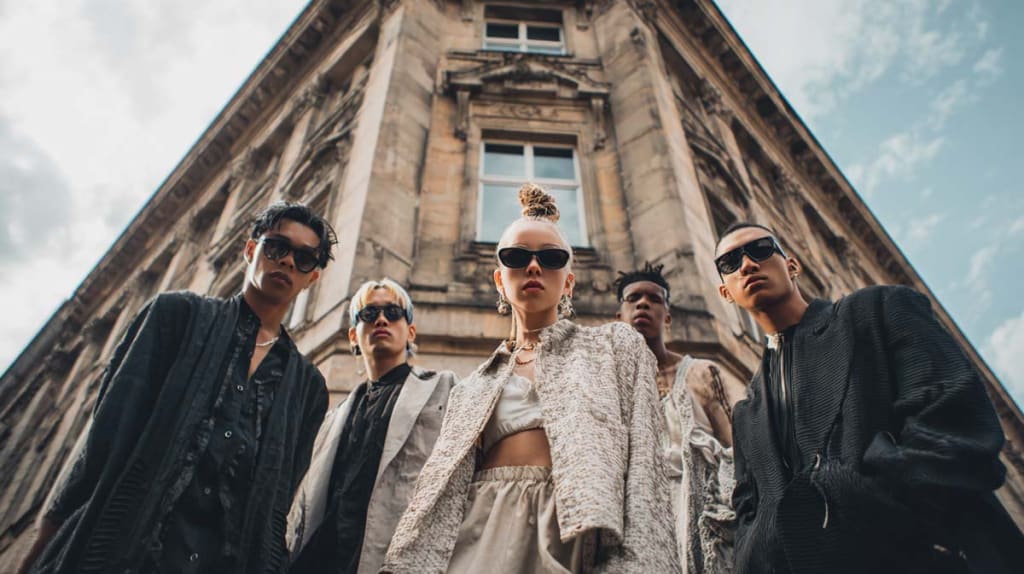

At Berlin Fashion Week, Danny Reinke once again proved why he remains one of Germany’s most thought-provoking designers. His Spring/Summer 2026 collection, The Hunt, unfolded like a modern fable—layered with history, emotion, and urgent questions about freedom, power, and self-definition.
A Medieval Myth Reimagined
The collection draws its core inspiration from the legendary Unicorn Tapestries of the 15th century. Historically rich and symbolically dense, the unicorn has long represented purity, captivity, and desire. Reinke reinterprets this myth through a contemporary lens, transforming the hunt into a metaphor for the modern search for identity in a world that increasingly confines individuality.
This symbolism reached its most arresting form in a now-viral piece: a floor-length coat featuring a hyper-realistic unicorn head draped over the shoulder. Unsettling yet poetic, the garment functioned as both armor and burden—beauty entwined with discomfort, fantasy colliding with reality.
Literature, Feminism, and Quiet Power
Beyond visual drama, The Hunt was deeply intellectual. Reinke wove literature directly into the show, incorporating quotes from female authors that explored themes of power, autonomy, and feminism. These words—sometimes subtle, sometimes confrontational—acted as emotional annotations to the garments, reinforcing the idea that clothing can speak, protest, and question.
Rather than loud slogans, the collection communicated feminism through restraint and strength: controlled tailoring, assertive silhouettes, and garments that felt protective rather than decorative.
Highlighted Costumes from Danny Reinke’s SS26 The Hunt
1. The Unicorn Head Coat: Beauty, Burden, and Captivity
The most talked-about piece from The Hunt was undoubtedly the dramatic unicorn head coat. Featuring a hyper-realistic unicorn head draped over the shoulder, the garment referenced the medieval unicorn hunts depicted in the Unicorn Tapestries.

Symbolically, the unicorn represents purity and freedom, yet it is often shown captured or restrained. Reinke translates this contradiction into fashion—turning the mythical creature into a weight the wearer must carry. The coat challenges the viewer: is the unicorn a trophy, a protector, or a reminder of lost freedom? The unsettling realism forces confrontation, making the piece as emotional as it is visually striking.
2. Power Silhouettes: Modern Armor for the Body
Several looks in the collection focused on strong, sculptural silhouettes—sharp shoulders, elongated coats, and structured bodices. These garments evoked the idea of modern armor, aligning with the collection’s themes of identity, resistance, and self-protection.
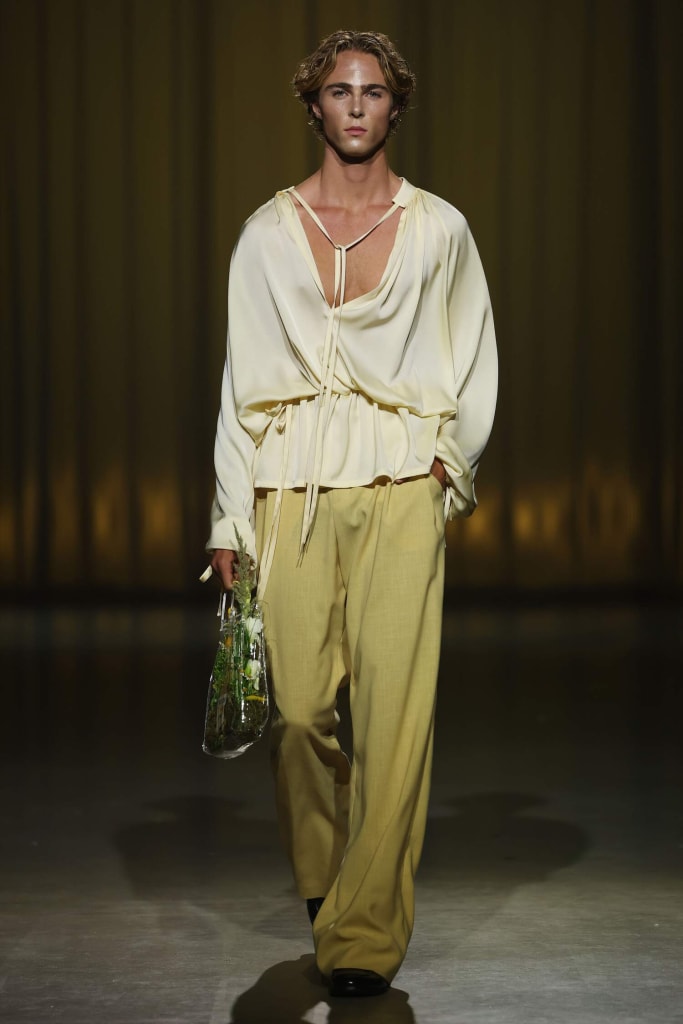
Rather than traditional softness often associated with femininity, Reinke presented strength as elegance. The cuts suggested control and confidence, reinforcing feminist ideas without relying on overt symbolism.
3. Textual Garments: Literature as a Design Element
A defining feature of The Hunt was the integration of literature into the clothing itself. Quotes from female authors addressing power, autonomy, and feminism were subtly embedded through prints, embroidery, and construction details.

These garments transformed clothing into a narrative medium—fashion that speaks quietly but firmly. The words did not overpower the design; instead, they rewarded closer inspection, reflecting how feminist thought often operates beneath the surface before demanding attention.
4. Sustainable Craft Pieces: Ethics Made Visible
Reinke’s commitment to sustainability appeared in garments constructed from recycled and deadstock materials. Rather than hiding these origins, the designer emphasized texture, layering, and visible craftsmanship. Uneven surfaces, raw finishes, and hand-worked details highlighted the human touch behind each piece.

These costumes communicated that sustainability is not a limitation but a creative catalyst—where innovation, responsibility, and luxury coexist.
5. Fluid Tailoring and Gender-Open Design
Several looks blurred traditional gender boundaries through fluid tailoring and adaptable forms. Coats, trousers, and layered separates were designed to move with the body rather than restrict it, reinforcing the collection’s central idea of freedom.

By avoiding rigid gender codes, Reinke allowed identity to remain open, personal, and evolving—mirroring the ongoing “hunt” for selfhood in contemporary society.
Sustainability Meets Artisanal Craft
True to Reinke’s ethos, sustainability was not an afterthought but the backbone of the collection. Recycled and deadstock materials were elevated through meticulous craftsmanship, proving that responsible fashion can still be luxurious and conceptually rich. Hand-worked textures, experimental fabric treatments, and innovative material combinations showcased a designer deeply invested in process as much as message.

The silhouettes were strong and deliberate—structured shoulders, elongated lines, and sculptural volumes—suggesting resilience and quiet defiance. Each look felt like a character in the narrative of The Hunt, unified yet individual.
A Defining Moment for Berlin Fashion
With The Hunt, Danny Reinke delivered more than a runway show; he presented a philosophical statement. By merging medieval mythology, feminist literature, sustainability, and avant-garde craftsmanship, the SS26 collection stood out as one of the most emotionally resonant moments of Berlin Fashion Week.
In a time when fashion often chases speed and spectacle, Reinke chose depth. The Hunt reminds us that fashion’s true power lies not just in how it looks—but in what it dares to ask.
At Berlin Fashion Week, Danny Reinke did not simply showcase clothing—he presented fashion as a vessel for storytelling, ideology, and introspection.
Live Your Dream of Billboards
We Connect Talent With Opportunity
BEFModels helps aspiring fashion models get noticed by promoting them online, connecting them with brands, and offering exciting events and collaborations.
Become a Model – Sign Up

