


In the age of AI-generated visuals and hyper-fast social media trends, even the biggest celebrities aren’t immune to digital misinformation. Recently, Bollywood star Alia Bhatt found herself at the center of a viral fashion controversy. Images circulating online appeared to show her endorsing a Pakistani clothing label’s silk suit collection—but was it real, or just another internet illusion?
Let’s break down what actually happened, why it went viral, and what it means for fashion, branding, and digital ethics.
The Viral Claim: Alia Bhatt in Pakistani Silk Suits
The controversy began when a Pakistan-based clothing brand, widely reported as Wajayesha Official, posted a series of images on Instagram. These visuals showed Alia Bhatt seemingly modeling their “pure shisha silk” suits in multiple colors—from lavender to emerald green.

The caption even suggested that the actress “liked” their collection, encouraging customers to place orders—making the post look like a legitimate celebrity endorsement.
Naturally, the internet exploded.
The Reality Check: AI-Generated, Not a Real Collaboration
Here’s the truth: Alia Bhatt did not collaborate with the brand.
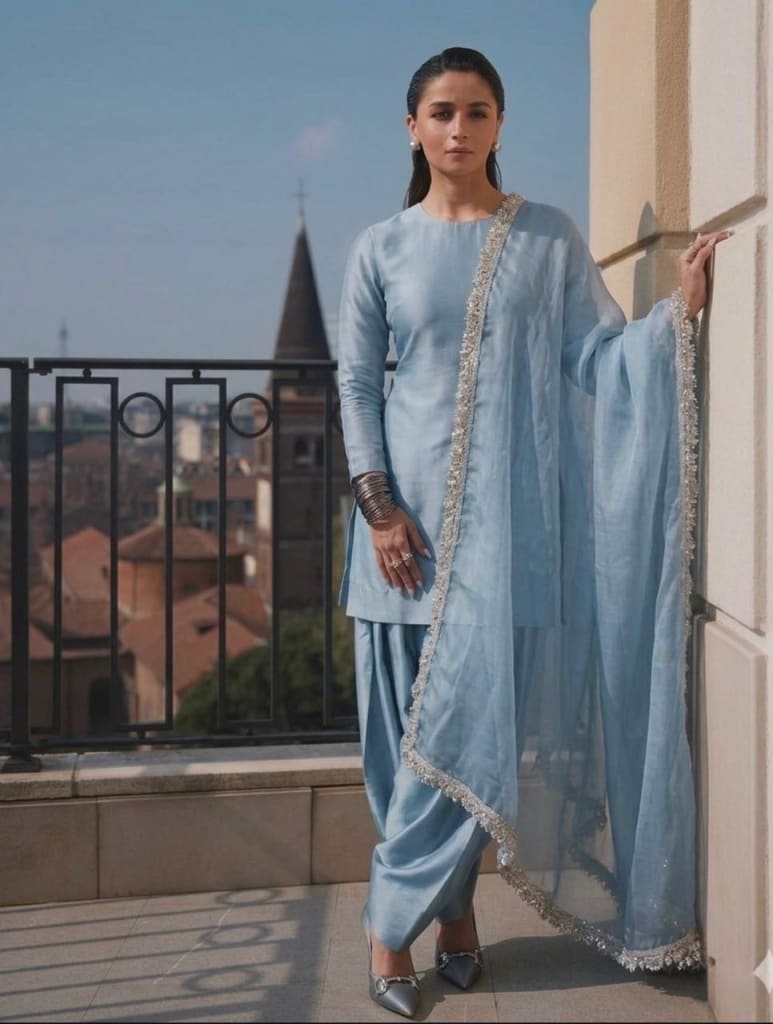
- The images were digitally altered using AI tools, not from any real photoshoot.
- The brand reportedly lifted existing photos from her public appearances—including runway walks and designer shoots—and edited the outfits to look like their silk suits.
- Fans quickly spotted inconsistencies, noting that backgrounds, poses, and styling remained identical while only the outfits changed.
This wasn’t fashion collaboration—it was image manipulation for marketing.
Internet Reactions: Fans Called It Out Instantly

Social media users didn’t hold back:
- Many accused the brand of using “forged” or “fake” images.
- Some warned that the actress could take legal action.
- Others questioned whether she even knew about the campaign.
The backlash highlights how quickly digital audiences can detect—and reject—inauthentic branding.
Why This Matters: AI, Fashion & Consent
This incident goes beyond just one viral post. It reflects a larger shift in the fashion industry:
1. Rise of AI in Fashion Marketing
AI-generated visuals are becoming more common—but without transparency, they blur the line between creative storytelling and deception.
2. Celebrity Image Rights
Using a celebrity’s likeness without consent can lead to legal consequences, as it violates personality and publicity rights.
3. Consumer Trust at Risk
When brands use fake endorsements, it damages credibility—not just for the brand, but for the broader fashion ecosystem.
Final Verdict: A Viral Mix-Up, Not a Real Endorsement
So, did Alia Bhatt actually front a Pakistani label in silk suits?
No.
This was a classic case of AI-generated imagery being passed off as a real celebrity collaboration.
While the visuals may have looked convincing at first glance, the truth reveals a cautionary tale about digital manipulation in fashion.
As AI continues to reshape fashion visuals, one thing becomes clear: authenticity is the new luxury.
And in a world where even a global icon like Alia Bhatt can be digitally “re-dressed,” the real question is—not what we see, but what we choose to believe.
Live Your Dream of Billboards
We Connect Talent With Opportunity
BEFModels helps aspiring fashion models get noticed by promoting them online, connecting them with brands, and offering exciting events and collaborations.
Become a Model – Sign Up

