


At the Met Gala 2026, where spectacle often overshadows substance, India arrived carrying something far more powerful than trend cycles — history, artistry, and cultural memory.
While conversations around the gala this year were dominated by criticism of billionaire patronage and fashion’s growing disconnect from reality, Indian attendees shifted the narrative. Instead of dressing merely for virality, they dressed with intention.
From sculptural steel mangoes to heirloom chiffons, India’s presence on the Met steps felt less like performance and more like preservation.
As fashion critic Vanessa Friedman once wrote, “Clothes are never a frivolity; they are always an expression of the times.”
And at Met Gala 2026, Indian fashion became an expression of heritage refusing to be diluted.
Isha Ambani and the Steel Mango That Became Art
Among the evening’s most striking accessories was the sculptural steel mango bag carried by Isha Ambani, created by celebrated contemporary artist Subodh Gupta.
The mango — a deeply emotional symbol in Indian culture associated with abundance, childhood summers, and domestic nostalgia — was transformed into polished steel, a material Gupta has long used to elevate ordinary Indian objects into contemporary art.

On the Met carpet, the piece functioned as more than luxury. It became conversation.
In a sea of crystal embellishments and couture theatrics, the steel mango quietly carried an entire cultural memory with it.
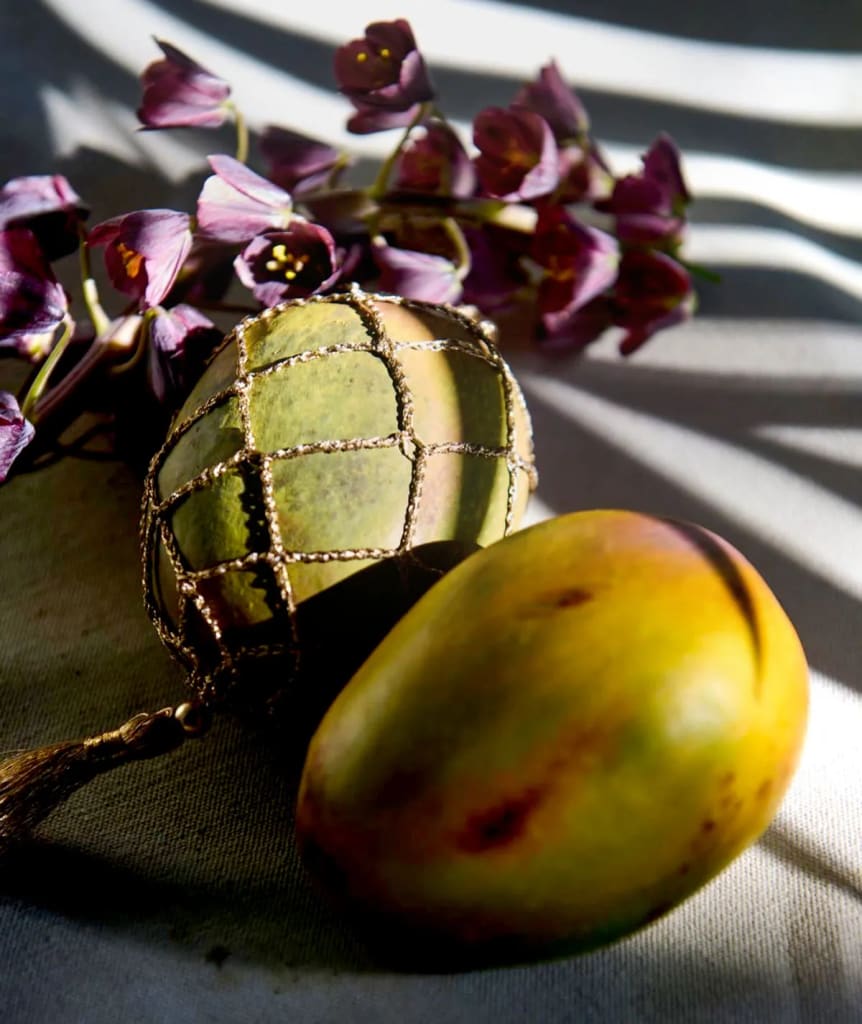
Gupta himself explained the philosophy behind merging wearable fashion with art:
“When someone wears the work or carries it, it becomes like a performance, they become part of the artwork. At the end of the day, whether it is the Met Gala or a museum, it is still about the experience of art.”
That idea — fashion as lived art — defined some of India’s strongest moments this year.
As legendary designer Yves Saint Laurent once said, “Fashion fades, style is eternal.”
And nothing about Gupta’s creation felt temporary.
Ananya Birla’s Sculptural Fashion Moment
Ananya Birla embraced conceptual dressing through a sculptural face mask also designed by Subodh Gupta.

The look blurred the boundaries between fashion installation and wearable sculpture. Metallic, reflective, and industrial in texture, the mask carried Gupta’s unmistakable visual language while adding an avant-garde edge to the carpet.
Yet unlike many experimental Met Gala looks that rely solely on shock value, Birla’s appearance remained rooted in Indian contemporary art.
It was dramatic, but never disconnected from meaning.
The look echoed a sentiment famously articulated by Alexander McQueen:
“Fashion should be a form of escapism, and not a form of imprisonment.”
Birla’s styling did exactly that — it escaped conventional red carpet expectations while remaining culturally grounded.
Ravi Kumari’s Quiet Tribute to Maharani Gayatri Devi
If there was one appearance that carried emotional depth above spectacle, it belonged to Ravi Kumari.
Dressed by Prabal Gurung, Kumari incorporated her great-grandmother Maharani Gayatri Devi’s chiffon sari and pearls into her ensemble — a tribute to one of India’s most enduring fashion figures.

Gayatri Devi’s elegance was never loud. It was refined, restrained, and impossibly graceful. Kumari understood that legacy does not need reinvention; sometimes it only needs remembrance.
The flowing chiffon stood in beautiful contrast to the heavily structured silhouettes dominating the carpet. The pearls, meanwhile, felt deeply personal — less accessory, more inheritance.
As Coco Chanel once famously observed:
“Elegance is when the inside is as beautiful as the outside.”
Kumari’s look embodied precisely that kind of elegance — emotional, intimate, and timeless.
Padmanabh Singh and the Power of Regional Craft
Sibling Padmanabh Singh brought another dimension of Indian heritage to the carpet through a Phulghar coat developed with Prabal Gurung and realised in Jaipur by local artisans and experts.
Rather than adapting Indian craftsmanship to mimic Western tailoring traditions, the look allowed regional Indian design language to exist confidently on its own terms.
The coat carried structure, detail, and royal precision while honouring the artisans behind it — something increasingly rare in modern luxury conversations.
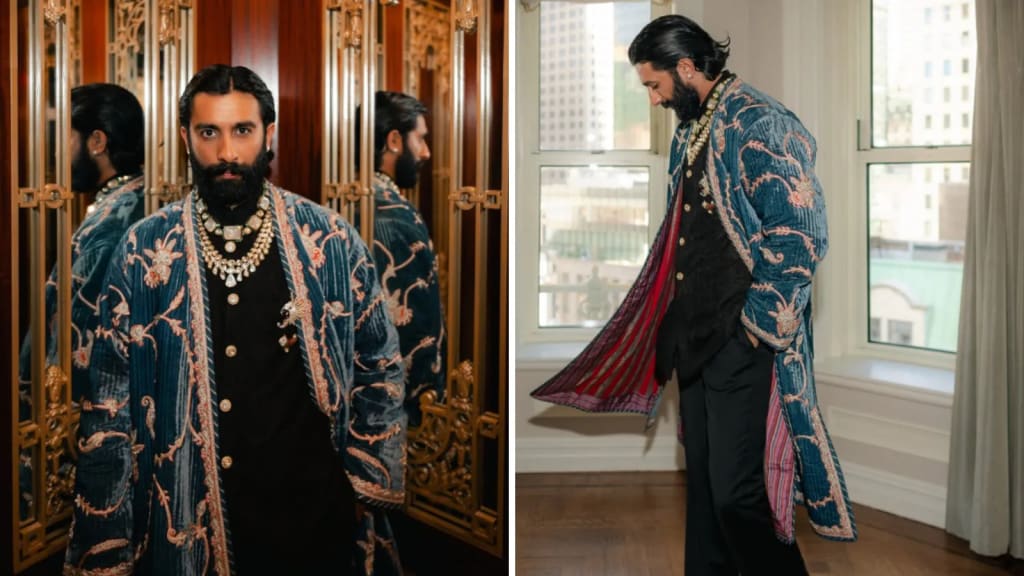
In many ways, the ensemble reflected what fashion historian Valerie Steele once noted:
“Fashion is about dreams and collective memory.”
Padmanabh Singh’s appearance did not simply showcase clothing. It showcased process, community, and regional artistry.
India’s Met Gala 2026 Was About Cultural Authorship
At a time when the Met Gala is frequently criticised for excess detached from meaning, India’s strongest appearances reminded audiences what fashion can still achieve when connected to memory and identity.
Steel mangoes became art. Heirloom pearls became storytelling devices. Regional tailoring became global conversation.
Most importantly, Indian attendees did not arrive at the Met Gala 2026 seeking approval from Western fashion systems. They arrived with their own archives, artisans, and artistic philosophies already intact.
As Prabal Gurung once said:
“Fashion is political. Fashion is cultural. Fashion is social.”
This year, India proved that fashion can also be historical — carrying generations, craftsmanship, and identity onto the world’s most watched carpet without losing itself in the spectacle.
Live Your Dream of Billboards
We Connect Talent With Opportunity
BEFModels helps aspiring fashion models get noticed by promoting them online, connecting them with brands, and offering exciting events and collaborations.
Become a Model – Sign Up

